The Paperless Pipeline: Automating Every Step of the Transaction
The agents getting their Saturdays back didn't hire a TC first. They mapped the file from contract to close, automated the eleven steps that didn't need a human, and stopped re-typing the same disclosure into three systems.
You signed a contract Tuesday. By Friday afternoon, the contract has lived in five places — your CRM, your transaction management platform, your email folder, your phone, and a printed copy in your car. The disclosure summary lives in two of those places, with two slightly different version numbers. The buyer's lender has a different timeline than the one in your file. The TC asked you a question you already answered Wednesday.
This is the working agent's quiet tax. Not the closings — the file work behind the closings. And it is, conservatively, somewhere between 10 and 18 hours a week of work that does not require a real estate license, does not produce GCI, and does not, in any meaningful way, separate top producers from middle-of-the-pack producers.
The producers who break the next ceiling didn't outwork the file. They eliminated it. Not all of it — files are real, signatures are real, compliance is real. But the tax around the file? The re-typing, the re-sending, the re-answering, the re-confirming? Compressed by 70–85% inside two quarters of intentional automation work, on tools the agent already pays for.
The paperless pipeline is not a software stack. It is a discipline applied to the software stack. Most agents have the tools. Almost none have the discipline.

"The contract should enter the system once. After that, every system should know about it without you typing the same thing twice."
Why This Is the Lever It Is
A working agent at 24 closings a year is touching roughly 24 contracts, 24 disclosure packets, 24 inspection schedules, 24 lender coordination threads, 24 closing-week logistics passes, and several hundred individual document signings, status updates, and check-ins. Each of those touches has, on average, three to five points where the agent re-types information that already exists somewhere else in the file.
That's roughly 250–400 instances per year of duplicate data entry, each of which takes 30 seconds to two minutes. The math is uncomfortable: somewhere between 50 and 130 hours a year of pure re-typing, by a licensed producer, at the licensed producer's hourly rate. That is two to three full work weeks of friction tax, paid annually, in exchange for nothing.
The agent who eliminates 80% of that — by setting up automation rules between the systems they already use — buys back two weeks of selling time per year, plus the cognitive overhead of remembering which version of the disclosure is in which system. That cognitive overhead is worth more than the hours, because it is what makes Tuesday afternoon feel like running uphill in fog.
The lever isn't a new transaction management platform. The lever is automating the four or five hand-offs between platforms you already pay for.
The Five Bottlenecks Every Closing Actually Has
Across thousands of files, the same five bottlenecks show up. Map them once and you can automate around them. Skip the mapping and you'll spend three years moving the bottleneck from system to system without ever closing it.
1. Contract Intake to CRM
The contract gets signed. The same data — buyer name, property address, contract price, closing date, lender contact, key dates — needs to land in the CRM with a status update, in the transaction management platform, on your calendar, and in the file folder.
Most agents do this manually four times. Top producers do it once. Either the e-signature platform pushes contract data to the CRM via a built-in integration, or a simple connector tool (most CRMs support this through Zapier or a native integration) fires the moment a contract is fully executed. Either way, the contract enters the system once. The other systems learn about it automatically.
If your CRM doesn't have an integration with your e-signature platform, that is the first thing to fix this quarter. It is the highest-leverage automation in the file work.
2. Disclosure Packet Coordination
Five to fifteen documents, depending on the state and the file. Each needs to be sent to the right party, signed, returned, archived, and reflected in the file's status. Most agents do this by chasing — texting the buyer, emailing the seller, asking the cooperating agent for the missing form, hand-tracking which one is back and which one isn't.
The automation move: a sequenced template inside your e-signature platform that fires the documents in the right order, sends auto-reminders at 24/48/72 hours, and reports completion back to your file dashboard without a human asking. The sequencing matters — disclosure packets are best sent in waves, not all at once, because buyer review fatigue kills response rates.
3. Lender, Title, and Inspection Hand-offs
The lender needs the contract. Title needs the contract. The inspector needs to be scheduled inside the inspection window. Each of these is a separate email today. Each of these is, conservatively, a 90-minute roundtrip — write the email, find the attachment, wait for the response, follow up the next day, re-send the attachment, confirm the date, calendar the date, update the file.
The automation move: shared file links with view-only permissions for partners, automated when-signed notifications, and a vendor-side intake form they fill out instead of an email thread. This requires once-per-relationship setup with each repeat partner. After that, the hand-off is one click.
4. Status Updates to Buyers, Sellers, and Cooperating Agents
The single most under-automated piece of the file. Every file has 8–12 status updates that need to go out — inspection completed, appraisal ordered, appraisal back, clear to close, scheduled to fund, etc. Most agents send these one at a time, one client at a time, by phone or text or email, because every client deserves a personal touch.
This is partially true and mostly a story. The personal touch belongs on the message that requires judgment — a problem on the inspection, a low appraisal, a financing issue. The status update on a normal milestone — appraisal back at value, clear to close issued, funding scheduled — should fire from your transaction management platform automatically, branded with your name, and you should review it in the CRM after the fact. Top producers send a manual touch on top of the automated one when the moment warrants. The automation isn't a substitute for the relationship. It is a substitute for the typing.

5. Post-Close Hand-off to Long-Term Follow-Up
The closing happens. The buyer becomes a past client. The CRM status needs to update. The follow-up cadence needs to start. The home anniversary touch needs to be queued for one year. The market update sequence needs to start at month two. The referral-ask should fire at week three.
Most agents do none of this automatically. The file closes, the buyer goes into the database as "past client," and the producer relies on remembering to follow up. By month four, the buyer hasn't heard from the agent. By month nine, the agent is no longer top-of-mind. By month thirteen, the buyer's friend asks them for an agent referral and the buyer says "I had a great experience with someone but I don't remember their name."
The automation move: the moment the file closes in your transaction management platform, a CRM rule changes the status to "past client," fires a 30-day check-in, queues the one-year home anniversary message, and adds the buyer to your monthly market update list. Configured once. Runs forever.
How Top Producers Run It
You can spot a producer running a paperless pipeline inside ten minutes of looking at their file workflow. The signals:
- They can name, without hesitation, the four or five integrations between their core systems — CRM, e-signature, transaction management, calendar, email.
- The contract data is entered exactly once per file. Everywhere else, it is read, not re-typed.
- A new file dashboard exists — usually inside the transaction management platform — that shows every active file's status without the agent having to open four different systems.
- Status updates to buyers, sellers, and cooperating agents go out automatically on milestone events. Manual touches stack on top of the automated ones, not in place of them.
- The post-close transition is automated. The new past client is in the long-term follow-up cadence inside 24 hours of funding.
- They have a written list of "automation candidates" — small repetitive tasks they haven't yet automated — and they work that list 30 minutes a week.
- They never re-type a name, address, or date. If they catch themselves doing it, they stop and fix the integration.
The Comfortable Lie Most Agents Carry
Here is the part producers won't say out loud: they don't automate the file because automation feels like a cop-out, like they're not "really doing the work."
The real work is not the typing. The real work is the listing presentation, the buyer consultation, the negotiation, the relationship. The typing is the friction tax. Confusing the two is what keeps an agent at 24 closings forever — they spend their actual time on the parts of the file that anyone with two weeks of training could do, and they protect that time as if it were the work itself, because it has come to feel like the work itself.
It isn't. It's the cost of the work. And the producers above the next ceiling charged that cost to a system instead of to themselves.
There is a second comfortable lie underneath this one: that personal touch requires personal typing. It doesn't. The personal touch is a real call at a real moment about a real issue. A "your inspection is complete and the report is attached" message is not a personal touch — it is a status update, and the buyer wants it fast, accurate, and in writing. They don't care whether you typed it. They care whether it arrived inside an hour of the inspection ending. Automation hits that bar. Manual rarely does.
Tools and Tactics That Compress This
The paperless pipeline doesn't need a new platform. It needs four small disciplines installed on the platforms you already pay for.
The integrations audit. Pull every system you log into during a typical week — CRM, e-signature, transaction management, email, calendar, MLS, your brokerage system, your marketing tool. List the data points that move between them. Highlight the ones that move via re-typing instead of via integration. That is your automation backlog.
The single source of truth rule. Every piece of data in a file lives in one canonical place and is read from there everywhere else. Contract price lives in the e-signature platform. Closing date lives in the transaction management calendar. Buyer contact lives in the CRM. If you find the same data point being maintained in two places, one of them is wrong, and you can't tell which.
The 30-minute weekly automation block. Friday afternoon, recurring, named. One small automation per week. Not a system overhaul — one small connection. Twelve months of this discipline and the file work is unrecognizable.
A weekly playbook that pre-builds the week's client-facing communication around the file's automated milestones is one option for keeping the producer in front of the relationship while the file moves on rails. Tools like Studio4Agents, with a weekly client-touch sequence that pairs with milestone events, can sit on top of your transaction stack without replacing any of it. Pick whatever does the job for you. The point isn't the tool — the point is that the producer's calendar protects the parts that require licensed judgment, and a system protects the parts that don't.
What Great Producers Actually Do Differently

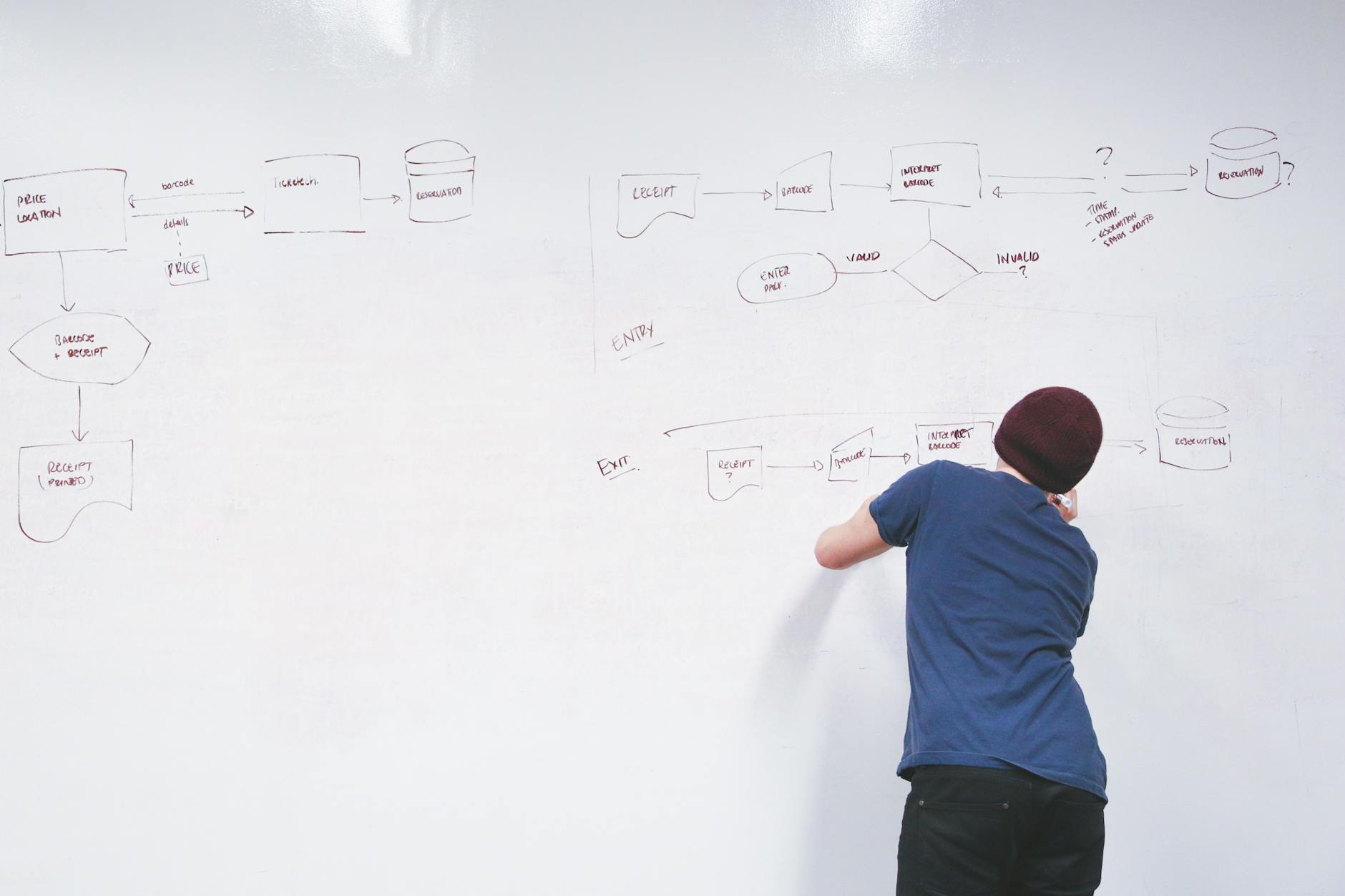
They Map the File Before They Automate
A 30-minute mapping session, on paper, with every step from contract acceptance to post-close listed in order. Each step gets one of three labels: keep manual (requires judgment), partial automation (needs a human to start, system to finish), or full automation (system end-to-end). Most agents discover that 60–70% of file steps fall in partial or full automation. Skipping this exercise produces "smart" automations on the wrong work.
They Automate the Hand-offs, Not the Documents
The documents are mostly fine — your e-signature platform handles them. The hand-offs are where time leaks. Lender to title. Title to inspection. Inspection to closing scheduling. Each hand-off is a status change that should propagate through every system without a human pushing it. Top producers fix one hand-off per quarter and run a tighter file every quarter.
They Build Templates That Survive Two Years
A status-update template that needs editing every six months is a template that's already obsolete. Top producers write status templates that are deliberately generic — milestone-driven, not deal-specific — so the templates can run on autopilot for years without going stale. The deal-specific touch goes in the manual call layered on top.
They Test Their Own Pipeline Quarterly
Once a quarter, top producers sit through a fake closing as if they were the buyer. Sign the documents. Watch the messages arrive. Check the timing, the wording, the sequence. The audits surface drift — a status update that fires three days late, a disclosure packet that lands in the wrong order, an automated email that mentions a vendor they no longer use. Fix it before a real client notices.
They Train Their Partners Into the Pipeline
The lender and title partners who repeat with you should know the workflow. Top producers send a one-page document — "here is how my files run" — to every repeat partner. Where you'll send the contract. What format the loan estimate should come back in. What status updates trigger which next steps. The pipeline runs better when the partners run inside it instead of around it.
They Treat the File as a Product, Not a Project
Every file is the same product, with custom inputs. The agent who treats each file as a one-off project re-invents the workflow 24 times a year. The agent who treats each file as a product run runs the same workflow 24 times, getting better at the workflow each time. The product mindset is what makes 50 closings a year possible without burnout. The project mindset caps you at 24 forever.
What Not to Do
Don't automate before you map. Building automations on top of an unmapped workflow encodes the existing dysfunction, faster. Map first. Eliminate steps that shouldn't exist. Then automate what's left.
Don't treat status updates as personal touches. Confusing the two is how producers convince themselves they don't have time to automate. The personal touch is the call about the inspection issue. The status update is "inspection complete, report attached." They are not the same message. Automate the second so you have time for the first.
Don't replace your stack to fix a workflow problem. The new transaction management platform will perform identically to the old one if you don't fix the integrations. Switching platforms is a 30-day distraction that resets your team's muscle memory. Fix the integrations on the platform you have, then evaluate whether you still need to switch.
What Your Next Move Looks Like
This week, in this exact order, do these five things:
- Block 60 minutes Saturday morning. Map your file, on paper, from contract to post-close. Every step, in order. Tag each step keep-manual, partial-automation, or full-automation.
- List the systems involved at each step. Highlight every place where the same data point lives in more than one system. That list is your integration backlog.
- Pick the single highest-leverage automation — almost always the contract-to-CRM hand-off. Spend 30 minutes setting it up this week. Most CRM and e-signature platforms have native integrations, and the rest can be bridged with a connector tool inside an hour.
- Block a 30-minute weekly automation block — Friday afternoon, recurring, named "automation." One small fix per week. The list will outlive any one push, but the discipline closes the gap.
- Schedule a quarterly pipeline audit on the calendar — 90 minutes, named, recurring. Same shape every quarter: pretend to be a buyer, walk through the file, fix the drift.
"The producer who eliminates the typing is the producer who shows up to the listing presentation rested. The producer who keeps typing shows up tired. Same week. Different outcome."
The Bottom Line
You probably already know which steps in your file should not require you. Most producers do. They just haven't spent the 60 minutes to map them, then the 30 minutes a week to fix them, because the typing has become invisible — it feels like the job instead of the friction tax around the job.
The agents above the next ceiling didn't outwork the file. They eliminated 80% of the work the file pretended to require. They mapped once. They integrated the systems they already pay for. They built status templates that survive years. They charged the typing to a system and kept their selling hours for selling.
A working producer reading this is somewhere between two and ten hours a week of pure re-typing time away from the version of themselves that actually has Friday afternoons back. That number compounds. Two hours a week is a hundred hours a year. A hundred hours a year is roughly a full work month of pure re-typing, billed annually, in exchange for nothing.
Stop charging it to yourself. Charge it to the system. The next level of your business is on the other side of one Saturday morning of mapping.