On Camera Without the Dread: A Video System for Agents Who Hate Video
On Camera Without the Dread: A Video System for Agents Who Hate Video
Most agents know video works. Most agents don't make it. The problem usually isn't the camera. It's the blank page, the rambling and the twelfth retake, and each of those has a fix.
Ask a room of agents whether video helps build a business and nearly every hand goes up. Ask how many posted a video of themselves last week and most of those hands go down.
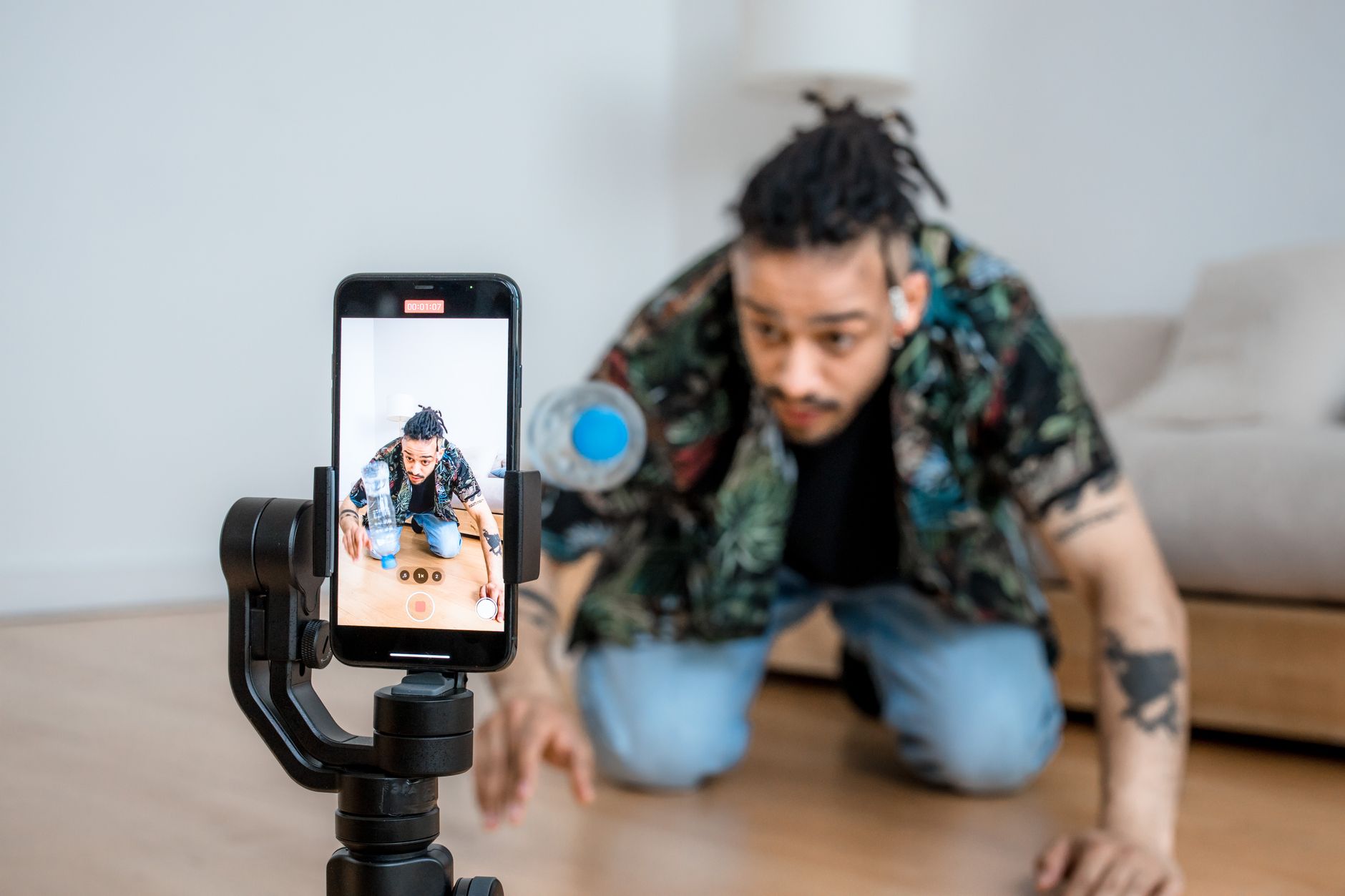
That gap isn't laziness. Video is the one marketing task that feels like a performance. You hit record, your mind goes blank, you say "um" four times in the first ten seconds, you start over, and forty minutes later you have one clip you don't like and a strong wish to never do this again.
When you look at what goes wrong, it's rarely the camera itself. It's three separate problems that feel like one: not knowing what to say, not being able to say it cleanly, and not liking how it looks. Each has a mechanical fix. Put the three fixes together and you have a system that gets a camera-shy agent to four usable videos in about half an hour a week.
Why It's Worth the Discomfort
Video does something no other format does: it lets people meet you before they meet you.
A seller deciding which agent to call is often choosing between names. A buyer scrolling past your post is deciding whether you seem like someone they'd want to spend weekends with. Text tells them what you know. Photos tell them what you look like. Video tells them what you're like: your pace, your warmth, whether you explain things clearly or talk over people's heads.
That familiarity adds up. Someone who has watched you explain three things over a few months walks into a listing appointment feeling like they already know you. That's hard to get any other way, and it's why video is worth some discomfort.
Problem One: "I Don't Know What to Say"
Fix: never record without a script, and keep it short.
Most people speak at around 130 to 150 words a minute on camera. A 60-second video is about 140 words, roughly two short paragraphs. That's the right length for almost everything you'll post.
Every short video can follow the same four-part shape:
- Hook (one sentence). The problem or surprising fact. "Most sellers price their home based on the wrong number."
- The point (two or three sentences). The one thing you want them to know.
- An example (one or two sentences). A real-world illustration, anonymized.
- Next step (one sentence). What they should do, or a question to ask you.
One point per video. Agents tend to cover everything they know about a topic in one take. Make five videos instead.
And write for speaking, not reading. Short sentences. Contractions. Words you'd actually use at a kitchen table. Read the script out loud once before recording. Anything you trip over, rewrite.
Problem Two: "I Ramble and Restart"
Fix: a teleprompter, used well.
A teleprompter is just your script scrolling on a screen near the camera lens. It takes away the hardest part of being on camera, which is remembering what comes next. You can find teleprompter apps for any phone, and some video tools have one built in.
A few habits make the difference between sounding natural and sounding like you're reading a hostage statement:
- Keep the text close to the lens. The farther your eyes travel from the camera, the more obvious the reading looks. Put the text in a narrow column at the top of the screen, near the lens.
- Set the scroll slower than you think. Most people set it too fast and end up chasing the words. Slow it down until you're slightly ahead of the text.
- Mark your pauses. A line break or an ellipsis in the script reminds you to breathe. Pauses sound confident. Rushing sounds nervous.
- Do one practice read. The first take is a rehearsal. The second is usually the keeper.
Once a teleprompter takes over remembering, most people find their delivery gets more relaxed, not less, because they can focus on how they're saying it instead of what comes next.
Problem Three: "I Don't Like How It Looks"
Fix: consistent branded bookends, and the basics done right.
A lot of video anxiety is really production anxiety. Every video feels like it needs an intro, graphics, a logo and a polished ending, and putting all that together each time is a job in itself.
So don't. Make it once. A branded open (a few seconds with your name, brokerage and a consistent look) and a branded close (your contact information and a short call to action) go on the front and back of every video. The middle, the part you record, can then be plain, short and simple. The bookends make it look finished, and every video looks like part of the same series.
This also opens up a format camera-shy agents tend to like: the voiceover. Branded open, then your voice over listing photos, neighborhood footage or a simple slide, then the branded close. You're not on camera at all, but people still hear your voice. Mix voiceovers with on-camera clips and you can keep up a weekly video habit while only showing your face part of the time.
The Minimum Gear List
You don't need a studio. You need four things done right:
- Sound first. People will watch a slightly grainy video. They won't sit through bad audio. An inexpensive clip-on microphone that plugs into your phone is the single best upgrade you can make.
- Light from the front. Face a window. Don't put it behind you. Daylight on your face beats most lighting kits.
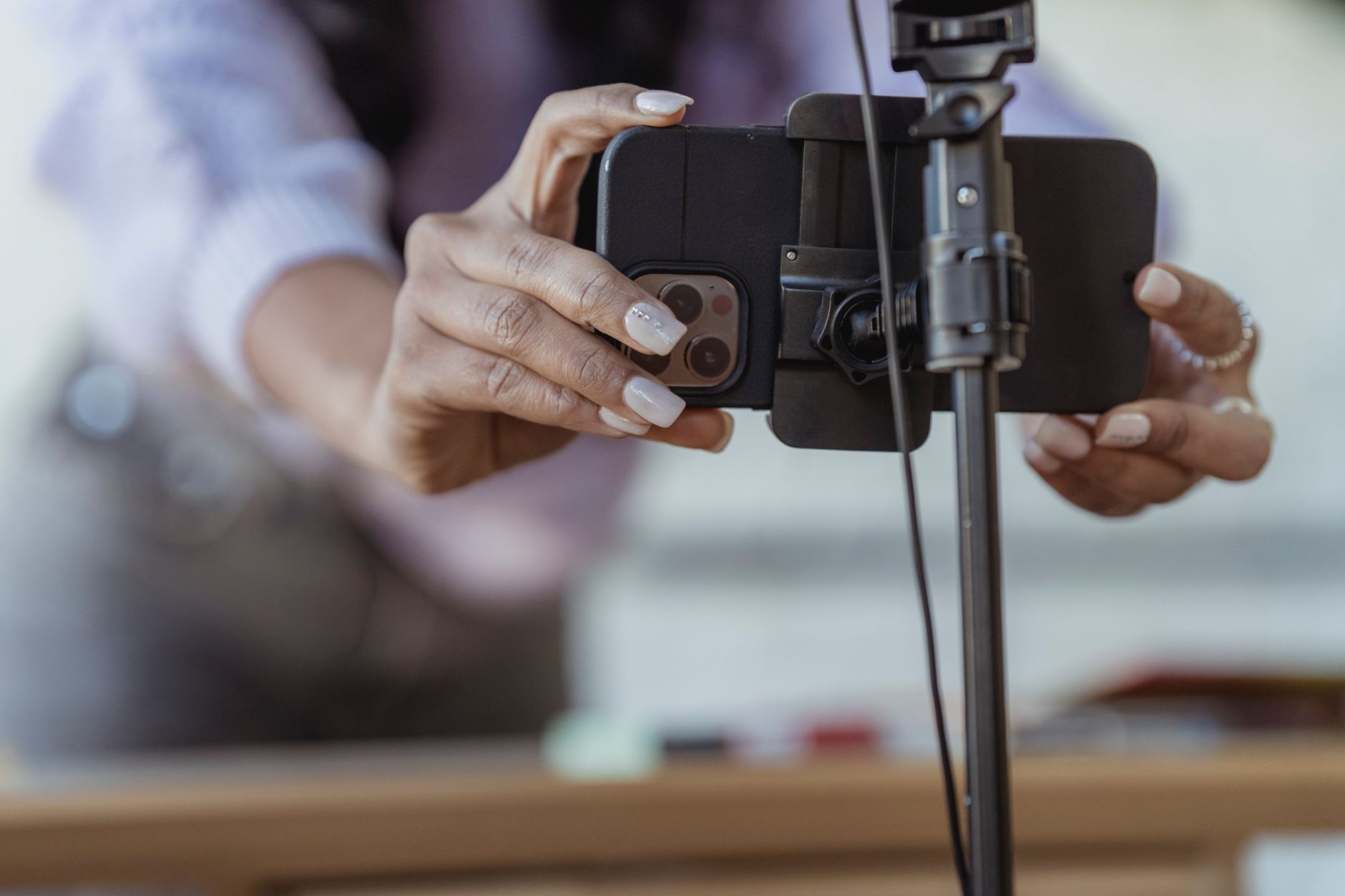
- Camera at eye level. A small tripod or a stack of books. Looking down into a phone isn't flattering on anyone.
- A calm background. A clean wall, a bookshelf, a tidy office. Not a pile of laundry, and not a busy street.
That's it. Record on the phone you already own.
The Thirty-Minute Batch
The system works because you do it in one sitting, not whenever you feel like it. Once a week, in a protected block:
- Five minutes: pick four topics and pull or write four short scripts.
- Five minutes: set up: window, mic, eye level, teleprompter loaded.
- Fifteen minutes: record all four, two takes each at most.
- Five minutes: add the bookends and save them to post through the week.
Four videos a week from thirty minutes. Treat it like any other block on your calendar (Time Blocking for Titans covers how to protect it).
Formats That Work for the Camera-Shy
- Answer one question. "A buyer asked me this week..." The easiest format there is, because the topic chose itself.
- Myth vs. fact. One common belief, one correction, thirty seconds.
- Voiceover tour. Your voice over listing photos or a neighborhood drive.
- The market note. One number from your market this month and what it means for buyers or sellers.
- What I'd tell my friend. Talk to the camera as if it's a friend asking for advice. Most people's delivery relaxes right away.
The Compliance Basics
Identify your brokerage. Many states treat video posts as advertising, with the same brokerage-identification rules as any other ad. Putting it in your branded close takes care of it every time.
Neighborhood videos and fair housing. Describe the place, not the people. Parks, commute times, the farmers market and the school district's published information are fine. Saying who a neighborhood is "great for" or describing the people who live there is how agents get into steering trouble.
Music. A popular song in the background of a business video can bring a copyright claim, especially in anything you boost as an ad. Use the licensed audio the platform provides, or royalty-free tracks.
Doing the Whole Batch in One Place
Every step above can be done with free or inexpensive tools: a teleprompter app, an editor for the bookends, a notes app for scripts. Most agents who quit video don't quit because one step is hard. They quit because it takes four apps, and four apps is friction every single week.
We built the video tools in Studio4Agents to remove that friction. (It's our product. Studio4Agents publishes this site.)
- The script is already written. Every article in the library comes with a 60-second video script in the hook, point, example, next-step shape described above.
- ScriptStudio is the teleprompter. It cuts your listing photos in on cue as the script scrolls, so a voiceover tour is just you reading.
- LiveStudio records straight from your camera and adds your branding while you record. The bookends are done when the take is.
- BrandStudio puts your name and brokerage on any photo or clip you already have, in your brokerage's colors.
No editing software and no learning curve. That's how the thirty-minute batch gets closer to twenty. It's included in the $79-a-month subscription, not sold as an add-on. Take a look at the live demo.
What to Watch Out For
Waiting until you feel ready. You won't. The first ten videos are the hardest, and the only way past them is to make them.
Too long. If a video goes past 90 seconds, it's probably two videos.
Over-producing. Effects, transitions and music under every word make it harder to make and harder to watch. Plain and consistent wins.
Reading flat. If you sound like you're reading, the script is written for the eye. Rewrite it for the ear.
Judging by the first month. The payoff is familiarity, and familiarity builds over months. Measure by whether people mention your videos when they call you, not by views in week two.
Your First Four Weeks
- Week one. Buy a clip-on mic. Find your window. Record one 60-second video using the four-part shape. Don't post it. Just make it.
- Week two. Build your branded open and close once. Record two videos and post both.
- Week three. First full thirty-minute batch: four videos, at least one of them a voiceover.
- Week four. Batch again. Look at which format felt easiest and make it your regular one.
"The dread isn't the camera. It's the blank page, the rambling, and the retakes, and each one has a fix."
The Bottom Line
Video isn't a talent you either have or don't. It's a process, and most of the discomfort comes from doing it without one.
Script it short. Read it from a teleprompter. Wrap it in the same bookends every time. Use voiceovers when you don't want to be on camera. Record four in one sitting each week. Do that for a few months and you'll have something most of your competitors don't: a library of short videos that lets people in your market feel like they know you before they ever call.